How to Get a Land Loan in 2026: Requirements, Rates, and the Step-by-Step Process
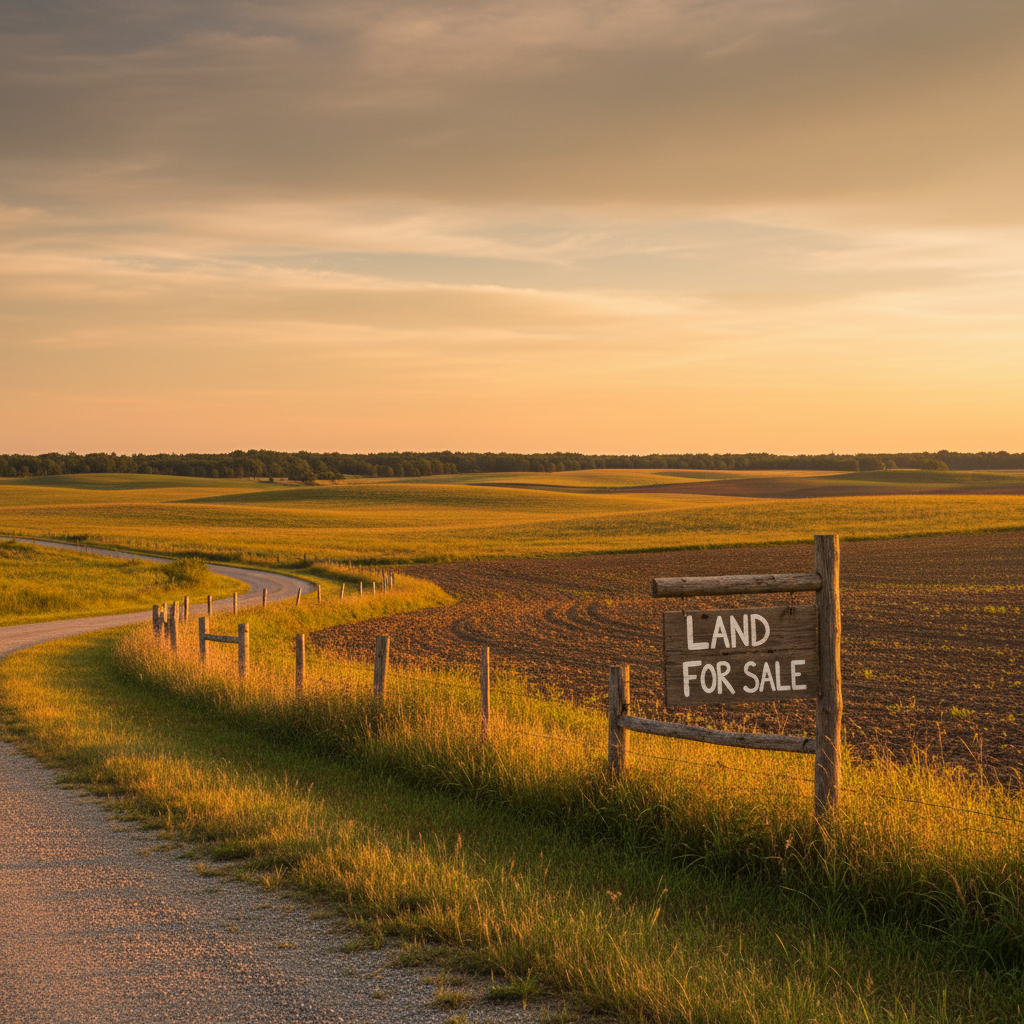
Buying land is one of the most rewarding purchases you can make — and one of the most misunderstood to finance. A land loan does not work like the mortgage you would use to buy a house. The down payment is usually larger, the underwriting is stricter, and the lender scrutinizes the property itself just as hard as it scrutinizes you.
The good news: once you understand how land loans actually work, the process is much easier to plan for. This guide walks you through what a land loan is, what lenders require in 2026, how land loan rates work, and the exact steps to get from "I found a parcel" to closing.
What is a land loan?
A land loan is financing used to buy a piece of land that does not already have a home or primary structure on it. Because there is no house serving as collateral, the lender is taking on more risk — vacant land produces no income, can take longer to resell, and is harder to appraise than a finished home. That single reality shapes nearly every land loan requirement you will encounter.
Land loans are typically written by lenders that understand rural and agricultural property: the USDA Farm Service Agency, cooperative farm credit lenders, community and agricultural banks, and lenders that originate loans to the standards of Farmer Mac, the secondary-market corporation Congress chartered in 1988. A conventional residential mortgage desk often is not the right place to start.
The types of land loans
Not all land is financed the same way. Lenders generally sort parcels into three buckets, and the category affects your down payment and terms:
- Raw land is completely undeveloped — no road access, no utilities, no improvements. It carries the strictest requirements because it is the hardest to value and resell.
- Unimproved land may have some basic features but still lacks full utilities or infrastructure. It sits in the middle.
- Improved (or build-ready) land has road access and utilities available at the lot. It is the easiest to finance and usually asks for the smallest down payment.
Agricultural and farmland purchases are their own category, with dedicated programs through the USDA and agricultural lenders. If the parcel will be farmed, ranched, or held as an income-producing operation, those ag-focused lenders are often the better fit.
Land loan requirements in 2026
It helps to think of land loan requirements as two lists: requirements about you, and requirements about the land. A strong application satisfies both.
What lenders look for in you:
- A larger down payment. Land loans generally ask for more money down than a home mortgage. The exact figure depends on the lender and the type of land, with raw land at the high end and improved lots at the low end. Government programs sit at the accessible end — FSA Farm Operating Loans carry no down payment, FSA Direct Farm Ownership loans allow financing of up to 95 percent of the purchase price, and the FSA Beginning Farmer Down Payment Loan asks for just 5 percent down. Loans written to Farmer Mac's standards typically expect a larger equity stake; the lender sets the exact figure.
- Solid credit and repayment history. There is no universal minimum credit score for a land loan, and agricultural lenders weigh your whole financial picture rather than one number. For its own programs, the USDA Farm Service Agency does not rely on credit scores at all — it looks for an acceptable history of repaying debts. Commercial and Farm Credit lenders do consider credit, and stronger credit generally means more options.
- Proven ability to repay. The lender needs real confidence you can make the payments — from farm income if the land will produce it, or from your off-farm income and finances if it will not.
What lenders look for in the land:
- A specialized appraisal by an appraiser who understands acreage, land class, water, and timber.
- Legal access — a public road or a recorded easement, not a handshake arrangement.
- Clear title, confirmed by a title search that surfaces any liens or encroachments.
- Zoning and permitted use that allows what you intend to do with the parcel.
- A current survey establishing the true boundaries and acreage.
- Environmental and flood checks — wetlands, flood zones, or contamination can all affect financeability.
If a parcel fails these property checks, even a financially strong buyer can struggle to finance it. That is exactly why this homework pays off before you make an offer.
How land loan rates work in 2026
Here is the honest, useful version: land loan rates are not a single published number, and no responsible source can promise you a specific rate before a lender reviews your situation. Rates are set by each individual lender and depend on the parcel, your finances, the loan term, and overall market conditions. As a rule, land loan rates tend to run somewhat higher than comparable home-mortgage rates, because vacant land is riskier collateral.
The one place you will find concrete, published figures is the government programs. For its direct loan programs, the USDA Farm Service Agency publishes its rates every month. Those are USDA program rates, not a rate any private lender or AgLoans offers, so check the current figures directly with USDA.
The broader 2026 backdrop matters too. Industry lenders and the Federal Reserve's regional ag-credit surveys describe a "higher-for-longer" interest-rate environment heading through 2026, and a meaningful share of agricultural lenders reported tightening their underwriting standards in 2025. In practical terms: a complete, well-prepared application is more valuable this year than it has been in a while.
Want to see what a payment might look like? Use the AgLoans land loan calculator to run an estimate based on different down payments and terms. The result is an illustration to help you plan — not a quote, an offer, or an approval. For figures specific to your situation, a lender is the only source that can give you real numbers.
Step-by-step: how to get a land loan
- Define the parcel and your purpose. Know the acreage, the land type (raw, unimproved, or improved), and what you intend to do with it. Your intended use determines which loan type and lender fit.
- Check your numbers. Look at your credit, your income and existing debts, and how much you can put down. Run a few scenarios in the calculator so you walk in with realistic expectations.
- Vet the land before you make an offer. Confirm legal access, zoning, and a clean title. Property problems sink more land loans than borrower problems do.
- Choose the right lender for the parcel. USDA programs and farm credit lenders focus on rural and agricultural land; community and ag banks vary by market. The same parcel can get different answers from different lenders, so comparing more than one is worth the effort.
- Gather your documentation. Most land loan applications ask for a similar core set (see below). Having it ready is one of the simplest ways to move faster.
- Submit a complete application and respond quickly. Incomplete or disorganized files are among the most common reasons applications stall.
- Move through appraisal, title, and underwriting to closing. Stay responsive, and expect the property checks above to run in parallel with the review of your finances.
The documents you'll need
Most land loan applications ask for a similar core set:
- Personal and business tax returns, often for the past three years
- A current balance sheet of your assets and liabilities
- Income and cash-flow statements for your household or operation
- The purchase contract for the land
- Plans, budgets, or a farm/operating plan if you intend to build on or farm the parcel
- Formation documents if you are buying through an LLC, partnership, or trust
Gathering and presenting these well is where good preparation genuinely pays off.
Common reasons land loans get denied — and how to avoid them
- Property access or title problems. Catch these early with a title and access review, and make your offer contingent on fixing anything that turns up.
- Too little money down for the land type. Know the down-payment expectation for raw versus improved land before you shop.
- An unclear plan or mismatched lender. Bring a realistic, specific plan, and start with a lender that finances rural land regularly.
- Disorganized financials. A complete, well-presented file is the single biggest factor within your control.
Where AgLoans fits
AgLoans.com is not a lender and does not make loans or credit decisions. What we do is help farmers, ranchers, and land buyers prepare a clear, lender-ready package. We work with underwriters who work with Farmer Mac and other private funding sources, for requests of $500,000 or more with agricultural real estate to help secure the loan. Nothing goes to underwriting until you say it's ready to go.
If you would rather talk it through with a person, you can reach a member of our team through the How It Works page — we are happy to help you figure out which lender and loan type fit your parcel and your plans. When you are ready, you can start an inquiry here.
Sources
- USDA Farm Service Agency — USDA Announces June 2026 Lending Rates for Agricultural Producers (published program rates, effective June 1, 2026). https://www.fsa.usda.gov/news-events/news/06-01-2026/usda-announces-june-2026-lending-rates-agricultural-producers
- USDA Farm Service Agency — Farm Ownership Loans (down payment limits, eligibility, credit history). https://www.fsa.usda.gov/resources/farm-loan-programs/farm-ownership-loans
- USDA Farm Service Agency — Farm Operating Loans (no down payment requirement). https://www.fsa.usda.gov/resources/farm-loan-programs/farm-operating-loans
- Federal Reserve Bank of Kansas City — Agricultural Finance Updates: farm lending activity and credit conditions. https://www.kansascityfed.org/agriculture/agfinance-updates/growth-in-farm-lending-activity-persists/
- Purdue University Center for Commercial Agriculture — 2026 Agricultural Credit Outlook. https://ag.purdue.edu/commercialag/home/paer-article/2026-agricultural-credit-outlook/
AgLoans.com is not a lender, bank, or mortgage broker, and does not make loans or issue credit decisions. This article is general educational information only and is not financial, legal, or tax advice. Interest rates, loan programs, terms, eligibility, and availability are set by individual lenders, vary by borrower and property, and change over time. Any rates referenced are published by third parties as of the date noted and should be confirmed directly with the relevant lender or agency. Calculator results are estimates for planning purposes only and are not an offer, quote, or approval. Consult a qualified lender, attorney, or tax professional about your specific situation.
Ready to take the next step?
Tell us the basics, and our team will review the next step with you. Start your free loan inquiry — estimates are fine.