Hobby Farm Loans: How to Finance a Small Farm
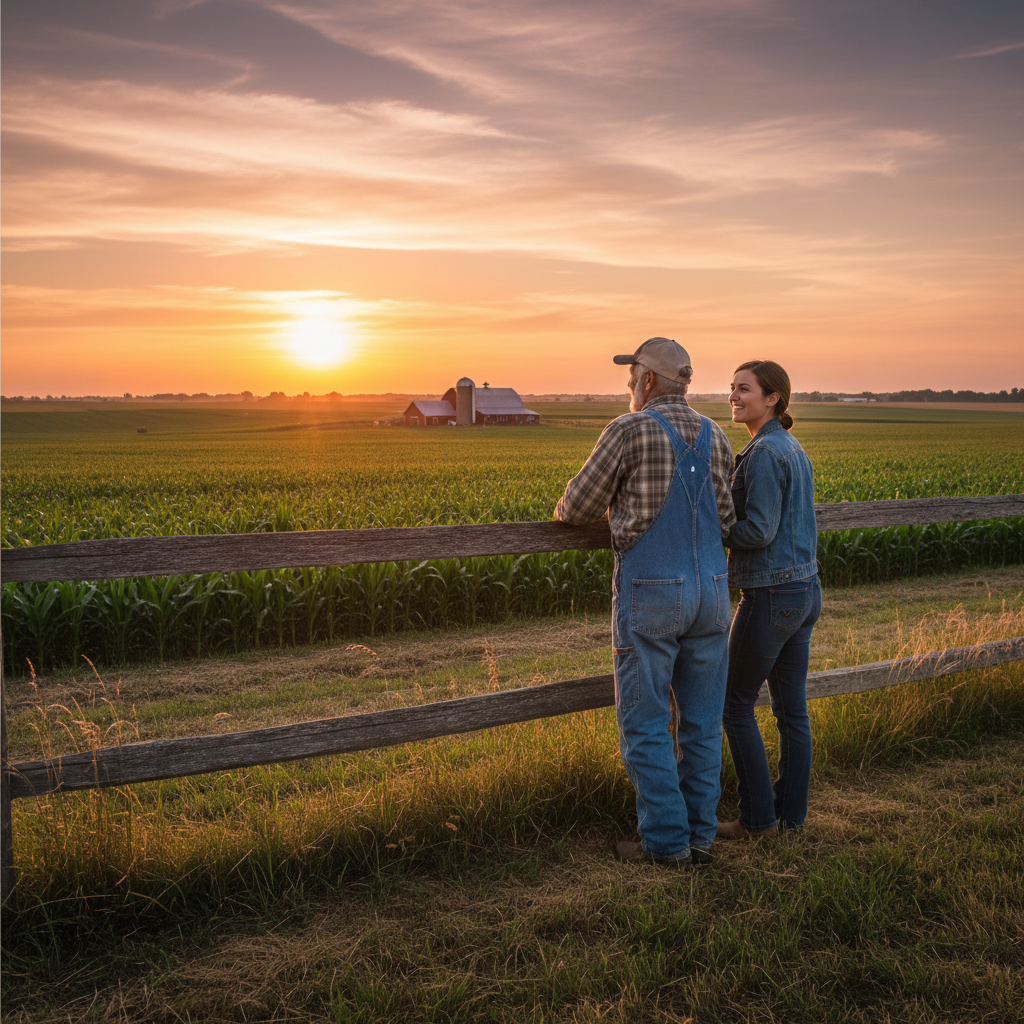
The dream is a familiar one: a few acres outside of town, a barn, a vegetable plot big enough to matter, maybe some chickens, a couple of horses, or a small orchard. It is a lifestyle as much as a piece of property — and it is far more common than most people assume.
Small farms are the backbone of American agriculture by sheer count. According to the USDA's 2022 Census of Agriculture, the United States had 1,900,487 farms, and farms with $50,000 or less in annual sales made up 74 percent of them. The USDA's Economic Research Service reports that small family farms — those with gross cash farm income below $350,000 — accounted for about 86 percent of all U.S. farms in 2023. In other words, the small operation is not the exception in American farming. It is the rule.
If you are planning to buy a hobby farm, the first practical question is almost always the same: how do I pay for it? This guide explains what a hobby farm loan is, why financing a small farm is different from buying an ordinary house, and the main options worth understanding before you start.
What Counts as a Hobby Farm?
There is no single legal definition of a "hobby farm." In everyday use, it describes a small acreage property kept primarily for lifestyle, enjoyment, and personal use rather than as a household's main source of income. The owners might sell eggs, hay, or produce at a roadside stand or farmers market, but the operation is not expected to fully support the family financially.
That distinction matters because lenders, appraisers, and the IRS all look at small farms a little differently depending on whether the property is run as a genuine business. For financing purposes, what a lender cares about most is the makeup of the property itself: how much of the value is in the home, how much is in the land, and how much is tied up in outbuildings such as barns, shops, fencing, wells, and equipment sheds.
A 5-acre place with a modern house and a small barn looks very different to a lender than a 40-acre parcel with an older farmhouse, a large livestock barn, and cross-fenced pasture — even if the asking prices are similar.
Why a Hobby Farm Doesn't Fit a Standard Mortgage
Most conventional home mortgages are designed for a house on a modest residential lot. A hobby farm breaks that mold in several ways, and those differences are exactly where buyers tend to get tripped up.
Acreage is the first issue. Many conventional loan programs limit how much land they will count toward a property's value, or cap the total acreage they will finance. If a large share of your purchase price is the land itself, a standard mortgage may only "value" a fraction of what you are actually buying.
Outbuildings are the second issue. A barn, a shop, or extensive fencing can represent real money, but conventional appraisals often assign them little or no value because they are hard to compare against typical residential sales. Zoning is a third factor — a property zoned agricultural can fall outside the comfort zone of a lender that mainly writes suburban home loans.
None of this means a hobby farm is hard to finance. It simply means the right loan usually comes from a lender that understands rural property and agricultural land — not the same lender that would finance a tract home.
Loan Options for Buying a Hobby Farm
Several types of lenders and programs are built for exactly this purpose. Understanding who they are makes the search far less intimidating.
Farm credit lenders. Cooperative farm credit lenders focus on agriculture and rural communities. Because Farm Credit lenders specialize in rural property, they are often comfortable with acreage, outbuildings, and part-time farm operations that puzzle a conventional bank.
USDA Farm Service Agency (FSA) programs. The FSA is the lending arm of the U.S. Department of Agriculture. It is designed to serve farmers and ranchers — including beginning and small-scale operators — who may not yet qualify for commercial credit on their own. The FSA's microloan program offers up to $50,000 with streamlined paperwork and flexible experience requirements, which can be a good fit for a small or first-time operation. Its direct farm ownership loans go up to $600,000, and its guaranteed loans (made by a regular bank but backed by the FSA) can exceed $2.3 million, a limit USDA adjusts each year. If your hobby farm has at least a modest commercial element, FSA programs are worth investigating.
Community banks and agricultural banks. Many local and regional banks, especially in rural areas, write loans for small farms and country properties. A community bank that knows the local land market can be flexible and quick.
Farmer Mac–backed loans. You may also see Farmer Mac mentioned during the process. Farmer Mac — formally the Federal Agricultural Mortgage Corporation — was established by Congress in 1988 under the Agricultural Credit Act of 1987. It does not lend directly to farmers. Instead, it operates a secondary market: it buys eligible farm and rural loans from lenders, which replenishes those lenders' capital so they can keep making new loans. Think of it as the agricultural counterpart to Fannie Mae in the home-mortgage world. Farmer Mac reported $29.5 billion in outstanding business volume at the end of 2024. For a borrower, the practical benefit is that loans sold into the Farmer Mac market often come with long, fixed-rate terms.
An Illustrative Example
Consider an illustrative scenario — a composite, not a real client. A couple in their forties want to leave a subdivision and buy 15 acres with a 1990s farmhouse, a 36-by-48 pole barn, and fenced pasture for two horses. The asking price is reasonable for the area, but their first stop — the bank that holds their current mortgage — counts only a few acres toward value and assigns nothing to the barn. The loan they are offered falls well short of the purchase price.
Working with an agricultural lender instead, the property is appraised as a rural residential acreage. The land, the home, and the outbuildings are all considered together, and the structure of the loan reflects what they are actually buying. The lesson is not that one lender is "good" and the other "bad" — it is that the property needs a lender equipped to value it correctly.
What Lenders Look At
While every lender is different and terms vary widely, hobby farm financing generally turns on a few common factors:
- Down payment. Rural and agricultural property loans often call for a larger down payment than a typical home mortgage. The exact figure depends on the lender, the loan type, and the property.
- Property mix. Lenders weigh how the value is split between the home, the land, and the outbuildings, and whether the parcel is mainly residential or mainly agricultural.
- Income and debt. For a hobby farm, lenders usually focus on your off-farm income and overall debt load, since the farm itself is not expected to carry the loan. Any farm income can help but is rarely required.
- Credit history. As with any loan, your credit profile influences the terms you are offered.
- Land use and zoning. Zoning, road access, water rights, and whether the land is tillable, pasture, or wooded all factor in.
Interest rates, terms, and down-payment requirements vary considerably from lender to lender and change with market conditions — which is exactly why comparing more than one option is worth the effort.
How to Prepare
A few steps will make the financing process smoother. Get clear on your budget, including not just the purchase price but the cost of repairs, fencing, equipment, and the first year of operating a property. Gather your financial documents — tax returns, pay stubs, and a list of assets and debts — before you apply. Learn the property: its zoning, acreage breakdown, water source, and any easements. And give yourself time, because rural appraisals can take longer than suburban ones.
Most importantly, talk to a lender that genuinely understands rural and agricultural property. The right match can be the difference between a frustrating search and a straightforward one.
Where AgLoans fits
AgLoans.com is not a lender. We help buyers prepare a clear, lender-ready package. We work with underwriters who work with Farmer Mac and other private funding sources. Our minimum thresholds are a loan amount of $500,000 or greater and agricultural real estate to help collateralize the loan. Some hobby farm purchases meet that threshold. If yours is smaller, we're not the right fit, and we'd rather tell you up front.
Sources
- USDA National Agricultural Statistics Service — 2022 Census of Agriculture (released February 2024): number of U.S. farms and small-farm share. https://www.nass.usda.gov/Newsroom/2024/02-13-2024.php
- USDA Economic Research Service — small family farms as a share of all U.S. farms, 2023. https://www.ers.usda.gov/topics/farm-economy/farm-structure-and-organization/farm-structure-and-contracting
- USDA Farm Service Agency — Farm Loan Programs (microloans, direct and guaranteed loan limits). https://www.fsa.usda.gov/resources/farm-loan-programs
- Farm Credit Administration — About Farmer Mac. https://www.fca.gov/farmer-mac-oversight/about-farmer-mac
- Federal Agricultural Mortgage Corporation (Farmer Mac) — 2024 full-year results. https://www.farmermac.com/
AgLoans.com is not a lender, bank, or mortgage broker, and does not make loans or issue credit decisions. This article is general educational information only and is not financial, legal, or tax advice. Loan programs, terms, rates, eligibility, and availability vary by lender and by borrower and change over time. Program details for government loans should be confirmed directly with the relevant agency. Consult a qualified lender, attorney, or tax professional about your specific situation.
Ready to take the next step?
Tell us the basics, and our team will review the next step with you. Start your free loan inquiry — estimates are fine.