North Carolina Farm, Ranch & Land Loans
Poultry, hogs, row crops and specialty crops across North Carolina. Finance agricultural real estate from $500,000 to $25 million.
AgLoans.com is not a bank or lender. Submitting information does not guarantee approval.
Our minimums: a loan amount of $500,000 or greater and agricultural real estate to help secure the loan.
$500K–$25M
Loan requests we review
Ag real estate
Helps secure the loan
Nationwide
Where we can help
1 business day
Typical time to hear from us
Simple Farm & Ranch Financing in North Carolina
We work with underwriters who work with Farmer Mac and other private funding sources.
Poultry Farm Loans
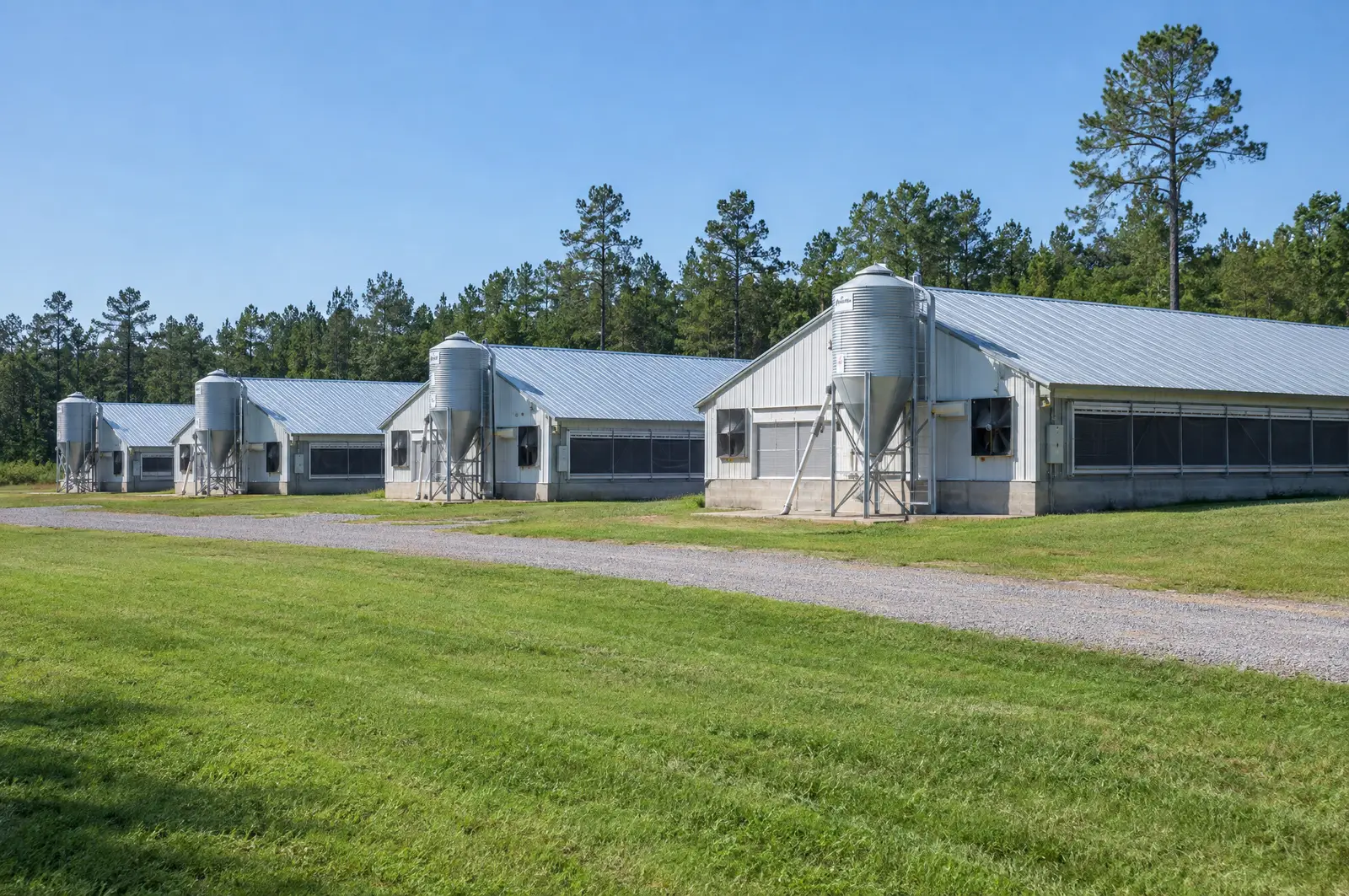
Poultry houses: new construction, expansion and refinance.
Agribusiness Loans
Hog and poultry facilities, grain storage and expansion capital.
Farmland Purchase
North Carolina cropland and farm properties.
Timber Land Loans
Working timberland secured by the land.
Farm Loan Refinance
Refinance an existing North Carolina farm loan.
Land Loans in North Carolina: What We Work On
AgLoans works on agricultural real estate loans in North Carolina from $500,000 to $25 million. We organize your information and work with underwriters; the lender makes the credit decision.
What we work on
What we don't do
- Homes, homesites or lots to build a house
- Residential mortgages of any kind, including homes on acreage
- Requests under $500,000, or without agricultural real estate to help secure the loan
AgLoans does not arrange residential mortgages. For a home or homesite, please contact a residential mortgage lender.
North Carolina Farmland Values and Agriculture by the Numbers
Average value per acre in 2026, from USDA's USDA NASS Land Values 2026 Summary (released July 31, 2026).
Farm real estate (land and buildings)
$5,750 per acre
up 5.1% from $5,470 in 2025
Cropland
$5,580 per acre
up 4.1% from $5,360 in 2025
Pasture
$6,380 per acre
up 5.5% from $6,050 in 2025
North Carolina agriculture (2022 Census of Agriculture)
- Farms
- 42,817
- Land in farms
- 8,128,136 acres
- Average farm size
- 190 acres
- Agricultural products sold
- $18.7 billion#8 among states
Top North Carolina commodity groups by sales
| Commodity group | 2022 sales | U.S. rank |
|---|---|---|
| Poultry and eggs | $9.2 billion | #1 |
| Hogs and pigs | $4.1 billion | #3 |
| Grains, oilseeds, dry beans, dry peas | $1.9 billion | #18 |
| Vegetables, melons, potatoes, sweet potatoes | $0.7 billion | #9 |
| Nursery, greenhouse, floriculture, sod | $0.6 billion | #9 |
Largest crops by acres: soybeans for beans (1,707,530 acres); corn for grain (822,459 acres); forage (hay/haylage) (628,117 acres).
These are statewide averages. Values for any one property vary, and the lender's appraisal sets the value used for a loan. Sources: USDA NASS, Land Values 2026 Summary; USDA NASS, 2022 Census of Agriculture, North Carolina State Profile.
Getting Financing in North Carolina
The same straightforward process, wherever you farm
Tell Us the Basics
Share the purpose, amount, property, and how you expect to repay. Estimates are fine.
Review the Next Step With Our Team
We clarify your request and whether an available lending program may be worth exploring.
Complete the Formal Application
If you choose to proceed, complete the formal application and provide the documents the lender needs.
Lender Review
Nothing goes to underwriting until you say it's ready to go. The lender performs underwriting and decides whether to offer credit and on what terms.
North Carolina Ag Loan FAQs
Ready to Explore North Carolina Financing?
Tell us the basics, and our team will review the next step with you.
Answer a few quick questions. It's free, there's no credit pull to start, and estimates are fine.
Rather talk? Call anytime. If we miss you, leave a message and we'll call you back by Monday, November 23. Or email info@agloans.com.
AgLoans.com is not a bank or lender. Submitting information does not guarantee approval.